



 >
> >
> >
>


Our Take on Warli Art: From Village Walls to Wearable Art
For centuries, the Warli tribe of Maharashtra has told the story of everyday life in simple geometric forms — weddings, harvests, dances, gatherings, painted on mud walls.
At Rey&I, we asked: if Warli artists were telling today's stories, what would they paint?
The answer is our latest capsule.
What Is Warli Art?
Warli painting is one of India's most celebrated tribal art forms, practised for over two thousand years by the Warli people of Maharashtra's hills and coastal belts. Traditionally rendered in white pigment on mud-brown walls, it uses just three shapes: circles, triangles and squares.
The circle is the sun and moon. The triangle is mountains and trees. The square marks sacred, enclosed space — a plot of land, a gathering. From these three forms, Warli artists built a full visual language for daily life: farming, hunting, dancing, ritual.
It isn't decoration. It's documentation — a running record of a community's bond with nature and each other.
Why Warli Is More Than Decorative Art
Warli's staying power isn't just its simplicity — it's what the simplicity holds.
Every figure moves. Every scene is communal. Warli rarely shows a person alone — it shows a circle of dancers, a line of farmers, a cluster of huts. The human figure, two triangles joined at a point, is minimal enough to represent anyone, doing anything.
That's why it still inspires designers long after leaving the mud wall. It's less a style to copy than a structure to build on: nature as subject, community as theme, movement as constant. Strip away the harvests and huts, and what's left is a way of seeing the world.
Reimagining Warli for Today's Adventurer
Here's where the capsule takes shape.
Instead of farmers in a field — surfers on a break. Instead of village games — beach volleyball at sunset. Instead of gathering beneath trees — gathering around a beach bar. Instead of rivers — the open ocean.
The grammar stays the same: circles, triangles, figures in motion. What changes is the story — not a harvest, but a weekend on the coast. Not a village dance, but a beach bonfire.
This isn't Warli-inspired print. It's Warli art as it might look if the artists were sketching today's coastline instead of yesterday's village.
Designed in Maharashtra, Inspired by Maharashtra
This capsule doesn't borrow Warli art and set it elsewhere. It stays home.
The Konkan coast, Alibaug's weekend beach culture, Goa's shoreline energy, Mumbai's Friday pull toward the sea — this is the same Maharashtra that produced Warli art, just a few kilometres further down the coastline. The lifestyle has shifted from fishing villages to surf towns, but the impulse hasn't: people gathered by water, telling each other stories.
Rey&I built this collection at that intersection — traditional Indian art meeting modern beachwear, on the coast that's always inspired both.
Meet the Collection
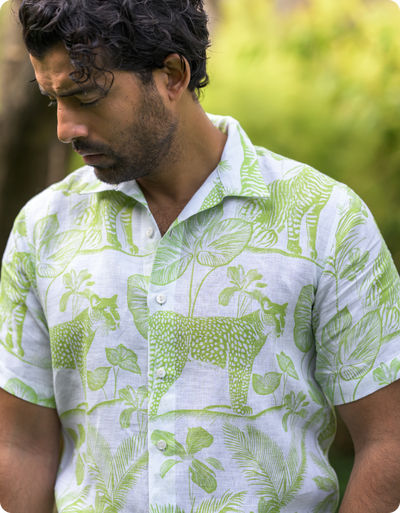
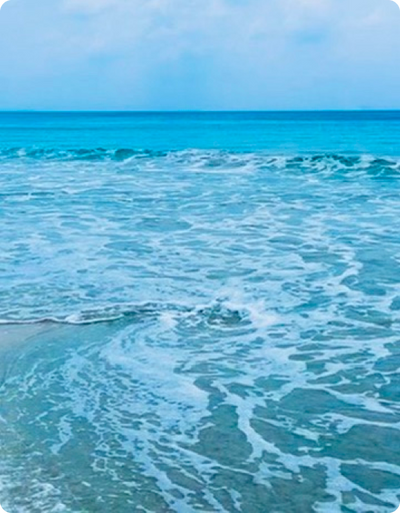
Warli Meadow — earthy greens, drawn from Maharashtra's forests. Warli Brick — warm terracotta, drawn from village walls and laterite earth. Warli Royal — bold blue, drawn from the Arabian Sea.
Three colourways, one visual language — each a different vantage point on the same coastline.
The Story Continues
For generations, Warli artists have documented the world around them. This capsule doesn't recreate that legacy — it celebrates it, imagining how those same timeless figures might tell today's stories: waves, sunshine, friendship, life by the coast.
Great storytelling never stands still. It simply finds a new canvas.
